By Scrap Cove · Published 2 November 2026
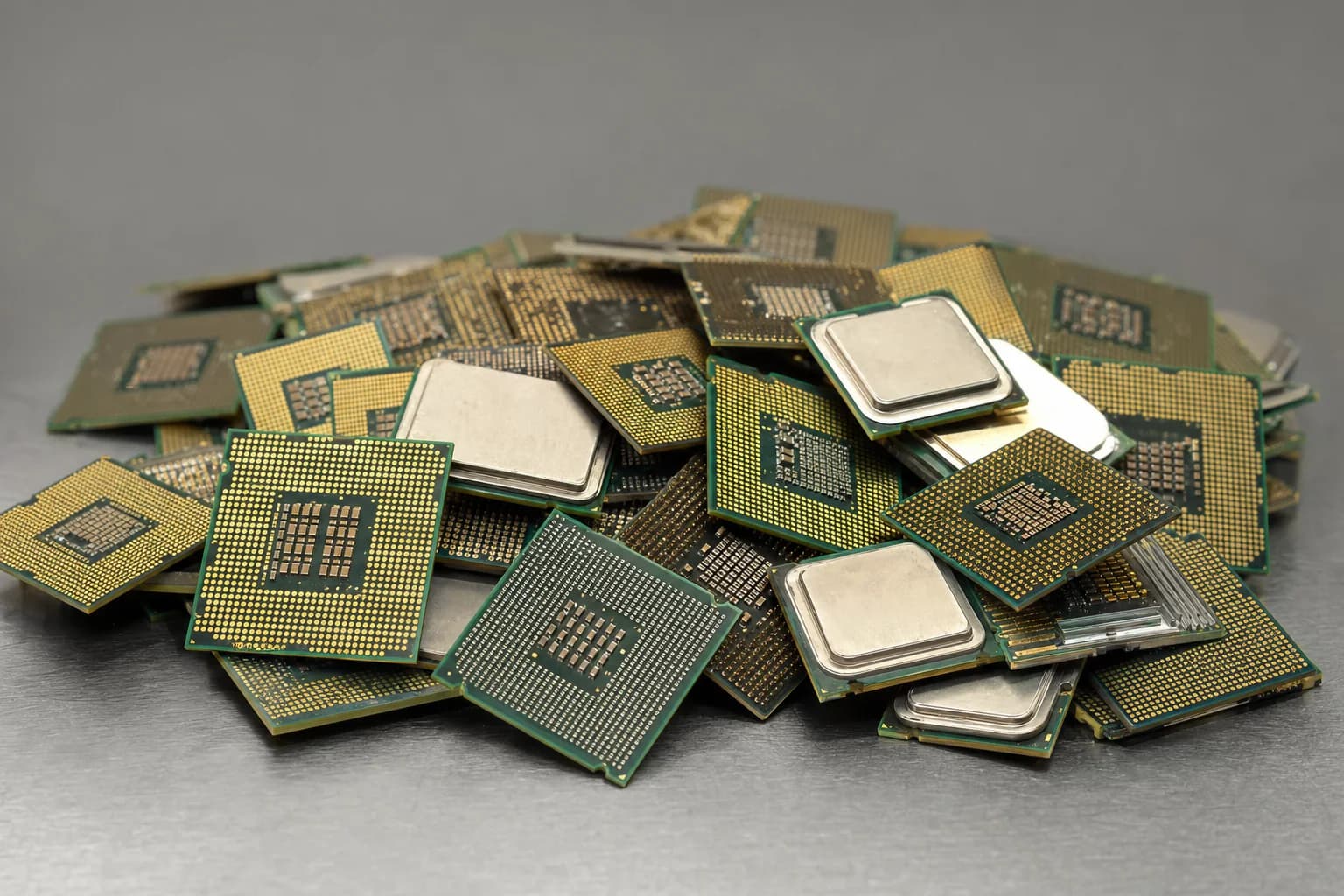
Fiber CPU scrap is one of the main grades of end-of-life processors that refiners, recyclers and traders buy in bulk, yet the name is used loosely across the market. For a buyer committing to a pallet or a container, an imprecise definition can lead to mismatched expectations, disputed lots and avoidable compliance questions. This guide defines the fiber CPU grade, describes what it typically looks like, explains how it differs from ceramic CPU scrap and sets out a specification outline you can use when asking for a quote. Terminology varies between suppliers and regions, so treat the descriptions below as a framework to verify against a written data sheet, not as a universal standard.
In this article
- Key takeaways
- What is fiber CPU scrap?
- Typical appearance of fiber CPU scrap
- Fiber CPU scrap versus ceramic CPU scrap
- Where the fiber CPU grade sits among CPU scrap grades
- Specification outline for the fiber CPU grade
- How to compare fiber CPU scrap lots and suppliers
- Compliance and export points for fiber CPU scrap buyers
- Requesting a quote for fiber CPU scrap
- Conclusion
Key takeaways
- Fiber CPU scrap generally refers to processors built on an organic, fiberglass-reinforced laminate substrate, as opposed to the hard ceramic body used on older packages.
- Appearance alone is a useful first check, but the definition of the fiber CPU grade differs between suppliers, so confirm it in writing before you buy.
- Metal content varies from lot to lot. Request a lot report instead of relying on a grade name to predict recovery.
- A good specification covers substrate type, contact type, permitted contamination, packaging, documentation and destination.
- Export and import of electronic scrap depend on the destination and on the buyer's own licences, so check your national rules first.
What is fiber CPU scrap?
In the bulk CPU scrap trade, "fiber" is shorthand for a processor whose package is made on an organic printed-circuit-style laminate. This is the same family of material used in ordinary circuit boards: layers of glass fiber cloth bonded with resin. The term separates these processors from ceramic-packaged CPUs, which have a rigid, fired-ceramic body.
A working definition
For purchasing purposes, a practical definition is: whole processors, usually with their original package, whose substrate is a fiberglass-resin laminate rather than ceramic, supplied as a loose, sorted lot. The package may carry a metal heat spreader, exposed die, pins, pads or a land grid array on the underside. A buyer should ask the supplier to state the definition on a data sheet so that both parties are describing the same material.
Why the term varies between suppliers
There is no single international standard for CPU scrap grade names. One trader may use "fiber" for any laminate-substrate processor, while another may reserve it for a narrower group, or use colour terms such as "black fiber" or "green fiber". Regional habits also differ. Because of this, the same word on two quotations may describe different material. Comparing definitions is as important as comparing quantities.
What the fiber grade is not
Fiber CPU scrap is not loose circuit boards, motherboards with processors still attached, heat sinks, or sockets. It is also not a statement about precious-metal content. The substrate type describes the package, not what a lot will yield, and content varies by lot.
Typical appearance of fiber CPU scrap
Most buyers identify the fiber CPU grade visually before they look at any paperwork. The following features are typical, though exceptions exist and older or unusual designs may not follow the pattern.
The substrate
The body is a thin, flat laminate board, usually a few millimetres (roughly one-tenth of an inch) thick. It has a slightly matte, resin-like surface and a woven texture is sometimes visible at the edges. Unlike ceramic, it has a little flex under firm pressure and does not shatter when dropped or struck. A heat spreader or metal lid is often fixed to the top, although some packages expose the silicon die.
Underside and contacts
The underside commonly shows small surface-mounted components, such as capacitors and resistors, arranged around the centre or edges. Contacts may be pins, flat pads or a grid of lands, depending on the package family. Whether those contacts are plated, and how, differs by design and should not be assumed from the grade name. Buyers who specifically want pins should consider the separate gold-plated pins grade described later.
Colour variation and black fiber CPU scrap
Laminate substrates appear in several colours, most often green, but also brown, dark blue, red or black. The phrase "black fiber CPU scrap" is used by some sellers for dark-coloured laminate packages. Because colour is a cosmetic choice by the manufacturer and not a reliable indicator of internal construction, ask any supplier using this phrase to describe exactly which packages it covers and whether the lot is sorted by colour or simply by substrate type.
Fiber CPU scrap versus ceramic CPU scrap
The clearest way to understand the fiber CPU grade is to set it beside ceramic. The table summarises the typical differences used for identification and handling. It describes physical characteristics only and makes no claim about metal content or value.
| Characteristic | Fiber CPU scrap | Ceramic CPU scrap |
|---|---|---|
| Substrate | Fiberglass-reinforced resin laminate | Fired ceramic body |
| Typical colour | Green, brown, black or other laminate colours | Beige, white, grey or off-white |
| Feel and weight | Thin, lighter, slight flex | Rigid, denser, brittle |
| When struck or dropped | Does not usually crack | May chip or fracture |
| Underside | Often has surface-mount components | Often plain with pins or a metal lid |
| Typical packaging concern | Resin and fibers need correct classification | Breakage and dust during transit |
| Metal content | Varies by lot; request a lot report | Varies by lot; request a lot report |
Quick handling checks
Some simple observations help a receiving team verify a delivery against its description. Check the substrate by sight and by touch, and look for chips or fracture lines that signal ceramic. Look for surface-mount components on the underside as a typical sign of laminate. Compare a random selection from several containers instead of the top layer only. These checks support inspection but do not replace an assay or a formal lot report.
Why the distinction matters commercially
Refiners and processors often prepare ceramic and laminate material through different routes, and a mixed delivery can complicate planning. A lot labelled one way but containing a meaningful share of the other can disrupt your process and your reconciliation. For more on how the ceramic grade is quoted, see Ceramic CPU Scrap Price: What Shapes Each Bulk Quote, which explains the factors that apply to individual quotations.
Where the fiber CPU grade sits among CPU scrap grades
Scrap Cove supplies four CPU scrap grades: ceramic, gold-plated pins, fiber and mixed. Understanding all four makes it easier to decide which fits your process.
Ceramic CPU scrap
Ceramic CPU scrap consists of processors with ceramic packages. It is the natural comparison point for the fiber grade because the two are separated mainly by substrate. Buyers who process ceramic material often want to be certain that fiber items are not present in the lot, or at least that any share is declared.
Gold-plated CPU pins
The gold-plated CPU pins grade covers pins rather than whole processors. It is a separate product with different handling and specification points, and it should not be confused with fiber processors that happen to have pins on the underside.
Mixed CPU scrap
Mixed CPU scrap combines processor types in one lot. Buyers who prefer broad supply, or who sort material themselves, may consider it. Anyone buying mixed material should request a description of how the mix is composed, because the proportion of each type is not fixed. Technical data sheets in PDF format are available per grade, which helps you compare definitions side by side before you request a quote.
Specification outline for the fiber CPU grade
A written specification protects both sides. The outline below lists fields that a bulk buyer should expect to see agreed before a quotation is accepted. It is a template for discussion, not a statement of any fixed Scrap Cove terms.
| Specification field | What to clarify |
|---|---|
| Grade name and definition | Exact wording used for the fiber CPU grade, including any colour terms |
| Substrate | Laminate only, or whether any ceramic items are tolerated and in what share |
| Form | Whole processors, with or without heat spreaders or lids |
| Contact type | Pins, pads or lands; whether pins are intact |
| Permitted contamination | Heat sinks, fans, sockets, boards, plastics, batteries, other metals |
| Condition | Dry, free of liquids and residues, no hazardous items |
| Quantity and unit | Weight in kilograms and pounds; pallet or container basis |
| Packaging | Container type and how it is sealed and labelled |
| Documentation | Lot report, data sheet, shipping paperwork required by both countries |
| Destination | Country, consignee and applicable licences |
Items to request in writing
- The technical data sheet for the grade.
- A lot report describing the specific lot being offered.
- A statement of what contamination is and is not included.
- Packaging and labelling arrangements for your destination.
- The paperwork each side will provide for the shipment.
Contamination and condition
Fiber CPU scrap is often handled in large volumes, so small percentages of foreign material add up. Define in advance how you will treat non-CPU items found on arrival, how they are measured and who holds the evidence. Agreeing the method for inspection in advance reduces disputes later.
How to compare fiber CPU scrap lots and suppliers
Because there is no published list price and no universal grade standard, comparison must rely on information rather than on a headline figure. The following approach suits buyers working with several suppliers at once.
- Compare definitions first, then quantities.
- Ask each supplier to describe the substrate, contact types and any contamination limits in the same terms.
- Check that each lot report states how the lot was assessed.
- Confirm what documentation accompanies the shipment.
- Confirm that the supplier can ship to your destination at all.
Why a lot report matters
Metal content varies by lot, and the grade name does not tell you what a particular lot contains. A lot report is the right place to look for lot-specific information. Be cautious of any offer that states a fixed metal content for an entire grade without evidence. Likewise, be wary of any seller who describes a grade as being worth a stated amount without a lot-based assessment.
Consistency across repeat shipments
For refiners planning ongoing supply, consistency of definition is as important as consistency of quality. Keep a record of the data sheet version and lot report for each delivery, and compare them. If a lot deviates from the earlier description, raise the matter with the supplier promptly and in writing.
Compliance and export points for fiber CPU scrap buyers
CPU scrap is electronic waste or a secondary raw material in many jurisdictions, and its classification can differ from country to country. Scrap Cove does not give legal, tax or customs advice, and nothing here should be read as confirming that a given shipment is permitted.
Check your national rules
Before requesting a quote, review your own national rules on electronic waste, imports and exports, and any rules on handling residues. International frameworks, such as the Basel Convention on the control of transboundary movements of hazardous wastes, may influence national rules, but how they apply differs by country and by material. Confirm the position with your regulator or a qualified adviser.
Destination and licence review
Every shipment depends on the destination and on the buyer's own licences and registrations. Scrap Cove does not ship to restricted destinations, and each enquiry is reviewed with the buyer and destination in mind. Having your licence details, consignee information and intended use ready makes this review more straightforward.
Record keeping
Retain the data sheet, lot report, shipping documents and inspection records for each consignment. Consistent records help with audits, with your own compliance programme and with any later question from authorities or downstream partners.
Requesting a quote for fiber CPU scrap
Scrap Cove sells to registered businesses by request for quote, with worldwide export of CPU scrap from the UK and USA subject to destination review. There are no list prices, because each quote is prepared individually.
What to include in your request
- Your company name and registration details.
- The grade or grades you are interested in, such as the fiber CPU grade or ceramic CPU scrap.
- The approximate quantity and whether you buy by the pallet or container.
- The destination country and port or delivery location.
- Any specification points that matter to your process, such as contamination limits or documentation.
How quotes are prepared
After a buyer and destination review, a quote is prepared for the specific request. Quote content is individual, so avoid assuming that a figure for one buyer applies to another. The factors involved in a ceramic quote are discussed in our guide to ceramic CPU scrap quote factors, and many of the same questions of definition, quantity and destination apply to fiber enquiries too.
Conclusion
Fiber CPU scrap is best understood as laminate-substrate processors, distinguished from ceramic mainly by the material of the package body. Because naming conventions differ, buyers should confirm the definition, contamination limits and documentation in writing and request a lot report instead of assuming content from the grade name. Export and import rules depend on the destination and on the buyer's own licences, so check your national rules before proceeding. When you are ready to proceed, please use the request-a-quote page to submit your business details, grade interest, quantity and destination.
Frequently asked questions
What is fiber CPU scrap?
Fiber CPU scrap generally means processors built on a fiberglass-reinforced resin laminate substrate, rather than a ceramic body. The exact definition varies between suppliers, so ask for a written data sheet describing the grade before you buy.
How can I tell fiber CPUs from ceramic CPUs?
Fiber processors usually have a thin, lightly flexible laminate board in green, brown or black, often with small surface-mount components on the underside. Ceramic processors are rigid, denser and typically beige, white or grey, and they can chip or fracture. These checks support inspection but do not replace a lot report.
What does black fiber CPU scrap mean?
It is a trade phrase some sellers use for dark-coloured laminate processors. Colour is a manufacturer's choice and not a dependable sign of internal construction, so ask the supplier exactly which packages the phrase covers.
Does the fiber CPU grade have a fixed metal content?
No. Metal content varies by lot, and a grade name does not predict what a particular lot contains. Request a lot report for the lot you are considering.
How is fiber CPU scrap different from mixed CPU scrap?
Fiber CPU scrap is defined by its laminate substrate, while mixed CPU scrap combines processor types in one lot. If you buy mixed material, ask how the lot is composed, because the proportions are not fixed.
Can I buy fiber CPU scrap from Scrap Cove?
Scrap Cove supplies fiber CPU scrap in bulk to registered businesses by request for quote. Each quote is prepared individually after a buyer and destination review, and there are no list prices.
Is it legal to import or export fiber CPU scrap?
This depends on the countries involved, how each classifies electronic scrap, and the buyer's own licences. Scrap Cove does not give legal or customs advice, so check your national rules on electronic waste and trade before requesting a quote.
What should I include when requesting a quote?
Provide your company details, the grade or grades you want, the approximate quantity, your destination and any specification points such as contamination limits or documentation needs. This lets the buyer and destination review proceed efficiently.