By Scrap Cove · Published 2 November 2026
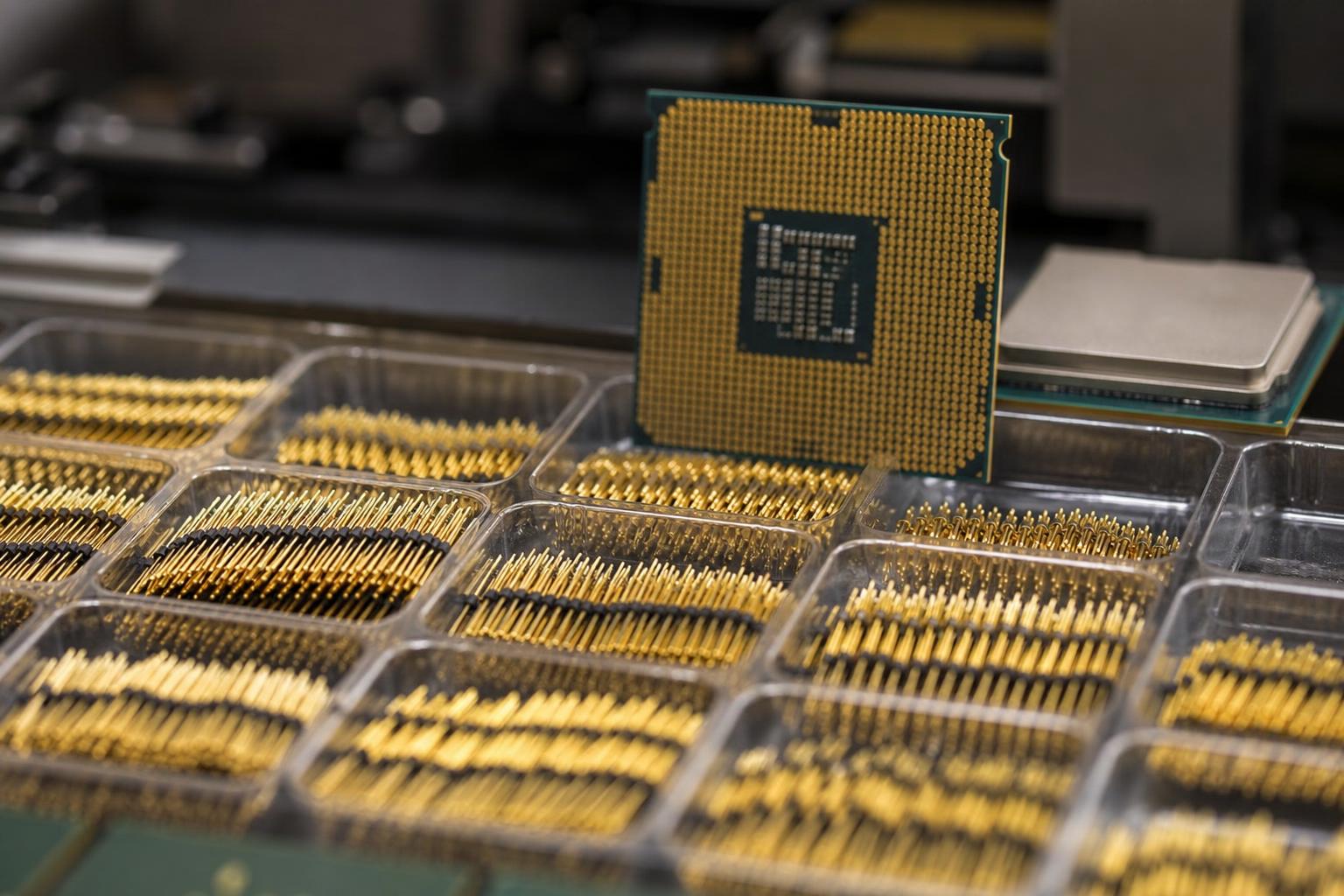
Buyers searching for gold plated CPU pins for sale are usually refiners, recyclers or traders who need a consistent, well-documented material rather than an unsorted pile of mixed scrap. This guide explains, from the supplier's side, how pins are sorted, how they are packed in sealed drums or cartons, and why quotes are expressed per kg. It also covers how to compare lots, what to check before importing, and how to request a quote. Scrap Cove supplies gold-plated CPU pins in bulk to registered businesses, exported from the UK and USA. We do not publish list prices, and metal content varies by lot, so the guidance below focuses on process and verification rather than figures.
In this article
- Key takeaways
- What gold plated CPU pins are and who buys them in bulk
- How gold plated pins are sorted before packing
- Sealed drums or cartons: how CPU pins are packed
- How per-kg quotes for CPU pins work
- How to compare lots and suppliers of gold CPU pins
- Export, compliance and destination checks
- How to request a quote for CPU pins in bulk
- Common mistakes when buying gold plated pins scrap
- Conclusion
Key takeaways
- Gold-plated CPU pins are sold as a separate grade from ceramic, fiber and mixed CPU scrap, so the grade name should always be matched to a written description.
- Sorting quality (separation from other material, removal of contaminants, consistency across the lot) strongly influences how a lot behaves at your facility.
- Pins are packed in sealed drums or cartons; the packing list should record unit counts and weights so receipts can be reconciled.
- Quotes are given per kg, but only quotes on the same weight basis and the same terms can be compared fairly.
- Metal content varies by lot. Request a lot report and rely on your own receiving checks rather than assuming a standard content.
- Export depends on the destination and on your own licences. Check your national rules on electronic waste before ordering.
What gold plated CPU pins are and who buys them in bulk
Gold-plated CPU pins are the small metal leads that connect certain processor packages to a socket. Once separated from the package, they are traded as a distinct material. The people who buy them in volume are precious-metal refiners, electronics recyclers, e-waste processors, metal traders and importers who purchase by the pallet or the container.
Where pins come from
Pins originate mainly from pin-grid-array style processors, where leads are fixed to a ceramic or organic body. Depending on the processor generation and the manufacturer, the plating, base metals and construction differ. That is one reason two lots both described as gold-plated pins can behave differently in refining, and why a written lot description matters more than a label.
How pins differ from ceramic, fiber and mixed grades
Scrap Cove supplies four grades: ceramic CPU scrap, gold-plated CPU pins, fiber CPU scrap and mixed CPU scrap. Ceramic grade refers to processors with ceramic bodies. Fiber grade refers to processors built on a fibreglass-type substrate. Mixed grade combines material types. Pins are the separated metal fraction, so they are handled, weighed and packed differently from whole processors. Technical data sheets (PDF) are available per grade and set out how each grade is described, which helps you decide which one fits your process.
How gold plated pins are sorted before packing
Sorting is the step that turns loose recovered material into a lot a buyer can evaluate. Exact methods differ between suppliers, so ask for a description of the steps applied to the lot you are considering. In general, buyers should expect the following stages to be addressed.
Separating pins from bodies and other material
The first task is keeping the pins fraction apart from whole processors, ceramic fragments and fibre-based boards. Mixing fractions makes weight-based quoting less meaningful, because a per-kg figure for pins applies to pins and not to material that merely sits alongside them. A clear separation also makes the grade description on your purchase documents accurate.
Removing foreign material
Foreign material in pin lots can include plastic fragments, loose solder, steel hardware, dust and fragments of ceramic. These add weight without adding the material you intend to process, and some of them complicate refining. A simple magnet pass for ferrous items, visual inspection and screening are widely used in the industry. Ask your supplier which checks are applied and how a lot is described if some residual material remains.
Keeping a lot consistent
Consistency matters as much as cleanliness. A lot is easier to evaluate when the material inside each drum or carton is comparable to the rest. Where material comes from different sources, the lot report and data sheet should make that clear. Because content varies by lot, consistency inside a lot is what allows your own sampling to be representative of the whole shipment.
Sealed drums or cartons: how CPU pins are packed
Pins are small, dense and easy to spill, so packing has a direct effect on weight accuracy and handling. Scrap Cove packs pins in sealed drums or cartons. The format for a particular order is confirmed in the individual quote.
Sealed drums
Drums are rigid, can be closed with a sealing ring, and limit spillage, moisture entry and casual access during transit. They suit heavier consignments and rougher handling chains. When you receive drums, inspect the closure and the outside of each unit before opening and record any damage.
Cartons and pallets
Cartons suit smaller or more flexibly sized consignments. They should be sealed with tape, strong enough for the contents, and consolidated onto pallets or into containers for export. Because pins are heavy for their volume, check the per-unit weight against the handling limits at your receiving site, including forklift access and manual-handling rules in your country.
| Format | Points to confirm before ordering |
|---|---|
| Sealed drums | Closure type, number of units, gross and net weight per unit, how drums are secured on pallets or in the container |
| Cartons | Sealing method, number of cartons per pallet, weight per carton, protection from moisture during transit |
Labelling, weighing and lot identification
Each unit should carry a lot or batch reference that matches the packing list and your purchase documents. The packing list should show unit counts and weights so that you can reconcile what arrives against what was dispatched. If you plan to resell material, keep these references: they let you trace a claim back to the lot.
How per-kg quotes for CPU pins work
Gold CPU pins are quoted per kg because weight is the common basis for buying and selling scrap in bulk. A per-kg quote is only a starting point, however. It needs to be read together with the terms around it.
What per kg actually means
One kilogram equals about 2.2 pounds, and one metric tonne equals 1,000 kg, or roughly 2,205 lb. Buyers in different regions often think in different units, so confirm the unit on every document. Also confirm whether the quoted weight is net weight (material only) or gross weight (including drum or carton), and where the weight is determined: at dispatch, at the port or at your facility.
What shapes an individual quote
Every Scrap Cove quote is prepared individually after a buyer and destination review. The table below summarises the inputs that typically matter. For a similar discussion on another grade, see our article on what shapes each bulk ceramic CPU scrap quote.
| Quote input | Why it matters |
|---|---|
| Grade and lot description | Content and condition vary by lot, so the quote applies to a defined lot, not a generic grade |
| Quantity | Pallet-scale and container-scale orders are planned differently |
| Packing format | Drums or cartons affect handling and unit weights |
| Destination | Shipping route and import requirements differ by country |
| Buyer details | Business registration and licences are reviewed as part of the quote |
Why there are no published list prices
Because lots differ and destinations differ, a single public price would be misleading. Treat any unqualified headline per-kg figure with caution, and ask what it assumes about the lot, weight basis and delivery terms.
How to compare lots and suppliers of gold CPU pins
Comparing suppliers of gold plated pins scrap is mostly a matter of putting each offer on the same footing. Price per kg alone says little about what you will actually process.
Ask for a lot report
Metal content varies by lot, and no grade name should be read as a guaranteed content. Request a lot report for the material you are considering and read it alongside the technical data sheet for the grade. Be wary of any offer that states a fixed content for an entire grade without lot-level documentation.
Plan your receiving inspection
Set out in advance how you will check an arriving shipment: inspection of seals and packaging, weighing against the packing list, photographic records, and representative sampling under your own refining or assay procedures. Doing this consistently across suppliers is the fairest way to compare them over time.
Questions to put to any supplier
- Is the quoted weight net or gross, and where is it measured?
- How is the lot described, and is a lot report available?
- Are the units sealed drums or cartons, and how are they identified?
- Which documents accompany the shipment?
- How are the buyer and the destination reviewed before a quote is issued?
Export, compliance and destination checks
Cross-border trade in electronic scrap is regulated in many countries, and the rules are not uniform. Nothing in this article is legal, tax or customs advice, and no shipment should be assumed permitted. Every export depends on the destination and on the buyer's own licences. Scrap Cove does not ship to restricted destinations.
Destination and buyer licences
Before ordering, confirm that your business is authorised under your national rules to import and process this material. Some countries require specific permits, registrations or notifications for electronic waste or scrap metal imports; others apply different conditions. Check with your competent authority or a qualified adviser.
Waste classification and national rules
Whether material is treated as waste, as scrap or as a secondary raw material can differ by country. International frameworks such as the Basel Convention on transboundary movements of hazardous wastes influence many national systems, but each country applies its own interpretation. Check your national rules on electronic waste and export, and those of any transit country.
Shipping documents
Expect to handle commercial invoices, packing lists and transport documents, plus any permits your own authorities require. Make sure the grade description, unit counts and weights match across all of them. Mismatches are a common cause of delays at borders.
How to request a quote for CPU pins in bulk
Scrap Cove sells in bulk to registered businesses by request for quote. Preparing complete information at the start makes the review more efficient.
What to prepare
- Your company name, registration details and the nature of your business (refiner, recycler, trader or importer).
- The destination country and, if known, the receiving port or site.
- The grade you want, here gold-plated CPU pins, or other grades if you buy several.
- The quantity you have in mind, expressed in kg or tonnes and in pallets or containers.
- Any handling constraints at your site, so they can be discussed, such as unit weight limits.
- Details of the licences or authorisations you hold under your national rules.
What happens after you submit
Your request is reviewed, including the buyer and the destination, and an individual quote is prepared. There are no list prices, so quotes are not issued automatically. Read the quote carefully, compare it against the questions in the previous section and request the technical data sheet for the grade and a lot report for the lot concerned.
Common mistakes when buying gold plated pins scrap
Most disputes in the scrap trade arise from assumptions rather than from bad faith. The points below are the ones we would encourage any buyer to review.
- Comparing quotes on different bases. A per-kg figure on gross weight and one on net weight are not equivalent.
- Treating a grade name as a content guarantee. Content varies by lot, so evaluate the lot, not just the label.
- Skipping receiving checks. Without consistent weighing and sampling you cannot compare suppliers over time.
- Ignoring import rules. Rules on electronic waste differ by country. Confirm yours before you commit.
- Overlooking handling limits. Dense material in drums or cartons can exceed what your site can safely move.
- Relying on unsealed or unlabelled units. Without identification, a discrepancy is hard to trace.
Conclusion
Buying gold plated CPU pins in bulk works best when sorting, packing and quoting are understood together. Sorting defines what is in the lot, sealed drums or cartons protect it and allow weights to be reconciled, and a per-kg quote is meaningful only when its weight basis and terms are clear. Because content varies by lot and export depends on destination and your own licences, rely on lot reports, technical data sheets and your national rules. To start, visit the request-a-quote page and submit your business and destination details.
Frequently asked questions
Are gold plated CPU pins for sale in bulk only?
Scrap Cove sells CPU scrap, including gold-plated pins, in bulk to registered businesses by request for quote. Orders are made by the pallet or container scale rather than as small retail lots. Quantities are discussed during the quote process.
How are gold plated CPU pins packed?
Pins are packed in sealed drums or cartons. The format for your order is confirmed in your individual quote, and the packing list should record unit counts and weights so you can reconcile the shipment on arrival.
Why are CPU pins quoted per kg?
Weight is the standard basis for trading scrap in bulk, so quotes are given per kg. You should still confirm whether the weight is net or gross, where it is measured, and what lot the quote applies to.
What is the gold content of your CPU pins?
Metal content varies by lot, so we do not state a fixed figure for a grade. Request a lot report and the technical data sheet for the grade, and carry out your own sampling and assay on receipt.
Do you publish prices for gold CPU pins?
No. Every quote is prepared individually after a buyer and destination review, and there are no list prices. This reflects differences between lots, quantities and destinations.
Can I import CPU pins into my country?
That depends on your national rules and on the licences your business holds, and nobody should assume an export is permitted. Check your own rules on electronic waste and import before ordering. Scrap Cove does not ship to restricted destinations.
What is the difference between CPU pins and ceramic CPU scrap?
Ceramic CPU scrap consists of processors with ceramic bodies, while gold-plated pins are the separated metal leads. They are handled, weighed and quoted as separate grades. Technical data sheets (PDF) are available for each grade.
How do I request a quote?
Use the request-a-quote page and provide your company details, destination, grade and approximate quantity. Your request is reviewed and an individual quote is prepared.