By Scrap Cove · Published 5 November 2026
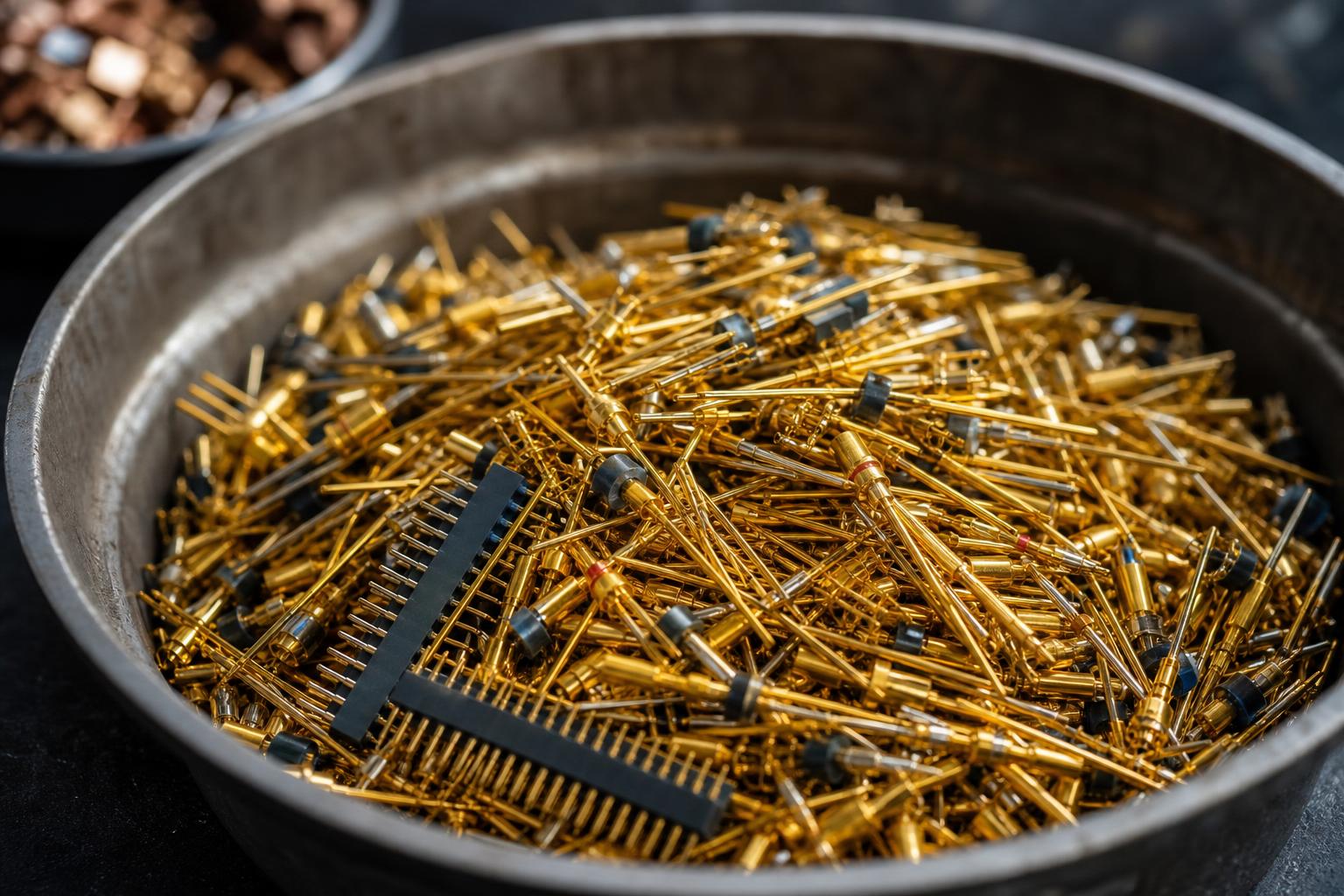
Gold plated pins scrap value is not a fixed number that can be read from a chart. For refiners, recyclers and traders buying in bulk, it is the outcome of several physical and commercial factors: how the pins are plated, what else is mixed in with them, and how consistent one lot is from the first pallet to the last. This guide explains those value drivers in practical terms, shows how to compare lots and suppliers on a like-for-like basis, and sets out what to check before you request a quote. It is written for registered businesses and takes a cautious, compliance-focused approach: results vary by lot, rules differ between countries, and every buyer must confirm their own obligations.
In this article
- Key takeaways
- What gold plated pins scrap value really means
- Plating: the first driver of gold CPU pins value
- Contamination and its effect on scrap gold pins
- Lot consistency: why uniform material is easier to assess
- Value drivers at a glance
- How to compare lots and suppliers when quotes are given per kg
- Where gold-plated pins sit among CPU scrap grades
- Compliance, export and destination review
- Preparing a request for a quote on gold plated pins
- Conclusion
Key takeaways
- Gold plated pins scrap value is assessed lot by lot. It cannot be reliably inferred from the grade name alone.
- Plating, contamination and lot consistency are the three practical drivers a buyer can inspect and ask about before purchase.
- Metal content varies by lot, so buyers should request a lot report and run their own incoming checks rather than rely on general figures.
- A per-kg (about 2.2 lb) quote is only comparable between suppliers when the material description, packaging and weighing basis are the same.
- Export and import of electronic scrap depend on the destination and on the buyer's own licences, so each buyer must check their national rules on electronic waste.
What gold plated pins scrap value really means
In the bulk scrap trade, the phrase describes the commercial worth of a defined lot of pins removed from processors, as judged by a refiner or trader. It combines the recoverable metal in the lot, the cost of processing it, and the risk that the material differs from its description. Because each of those inputs changes from lot to lot, there is no universal figure that applies to every shipment.
Value is assessed lot by lot
Two lots sold under the same grade name can behave very differently once they reach a refinery. Differences in source equipment, processor age, handling and storage all feed through to the result. For this reason we do not state the metal content of a grade as a fact. Content varies by lot, and buyers should request a lot report and combine it with their own sampling and assay procedures.
Why a single per-kg figure can mislead
Searches for CPU pins price per kg are common, but a headline number without context says little. It does not tell you how clean the pins are, how uniform the lot is, or what basis the weight was taken on. A figure from one market, date or specification cannot be transferred to another. We do not publish list prices; each quote is prepared individually after a buyer and destination review.
Terms buyers use for pins
You will see the material described as scrap gold pins, gold CPU pins, pin scrap or gold-plated CPU pins. These names are used loosely. Before comparing offers, confirm that each supplier means the same physical material: pins removed from the processor body, free of ceramic or plastic substrate, and presented in the same condition.
Plating: the first driver of gold CPU pins value
The plating is the reason these pins are traded as a separate grade, so it is the first thing to understand. Yet it is also the least visible attribute. A buyer cannot judge plating quality by eye across a pallet, which is why documentation and incoming analysis matter.
Plating thickness and coverage
Plating thickness is usually expressed in micrometres (µm) or microinches. It differs between connector designs and manufacturers, and coverage can be uneven along a single pin. Worn or abraded pins, or pins that have been mechanically stressed during removal, may show different surface condition from undisturbed ones. Because this varies, treat any generic plating claim with caution and ask how the supplier describes the lot.
Underlayers and base metal
Connector pins are normally built from a base metal with one or more underlayers beneath the visible surface layer. The base material and underlayers matter to a refiner because they influence the processing route and what other metals report to the solution or melt. Construction is not identical across processor families, so a lot that mixes several designs is harder to predict than a lot of one design.
Differences between processor generations
Pin geometry, plating approach and substrate have changed across processor generations. A lot drawn mainly from one era tends to be more uniform than one gathered from many. When you read a lot report, look for how the supplier describes the source mix, since this is often a better indicator than the grade label alone. Our guide to gold plated CPU pins for sale explains how pins are sorted, packed and quoted per kg.
Contamination and its effect on scrap gold pins
Contamination is any material in the lot that is not the pin metal you intend to buy. It lowers the proportion of useful material per kg, adds handling or processing steps, and can complicate sampling. It is also the factor most easily reduced by careful preparation, so it is worth asking about directly.
Non-metallic contamination
Typical examples include fragments of ceramic or fibre-glass substrate, plastic housings, adhesive, packaging debris and loose dust. These items add weight without adding recoverable metal. Even small percentages by weight can matter across a container-sized shipment, and a lot with visible debris is harder to sample reliably.
Foreign metals and magnetic material
Steel fragments, solder, leaded components, screws or mixed alloys may be present if sorting was not thorough. Some of these affect downstream processing or create environmental and safety handling considerations. A simple magnet check at receipt is a common practice among processors, and a supplier should be able to describe how the lot was separated.
Moisture, oil and dust
Moisture, grease and fine dust change the weight you pay for and can interfere with sampling. Poor storage or damp packaging can cause material to clump or corrode. Ask how the material is stored and packed, and whether weights are taken as packed or on another basis.
Lot consistency: why uniform material is easier to assess
Consistency describes how closely every part of a lot resembles the rest. For a buyer, it determines whether a lot report and a handful of samples represent the whole shipment. A uniform lot can be assessed with more confidence; a variable one carries more uncertainty, and that uncertainty is usually reflected in the commercial terms.
Source mix within a lot
Pins from a single source stream tend to be more alike than pins pooled from several suppliers or product types. Ask whether the lot comes from one stream or a blend, and whether blending happens across pallets. If blending is intended, request a description of how it is done so your sampling plan matches it.
Pin form, size and condition
Pins that are whole, straight and similar in length behave differently in handling and processing from bent, broken or fragmentary material. Check how the lot is described in terms of size range and condition, and whether any fines are present.
Consistency across pallets and containers
For multi-pallet or container purchases, consistency between units matters as much as the average. Ask whether the lot report covers the whole consignment or a portion of it, and agree in advance how you will sample on arrival so any discrepancy can be discussed on a clear factual basis.
Value drivers at a glance
The table below summarises the main drivers, what a buyer can examine, and what to ask a supplier. It is a checklist for due diligence rather than a statement about any specific lot.
| Value driver | What to look at | Why it matters | What to ask for |
|---|---|---|---|
| Plating | Thickness, coverage, underlayers, processor generation | Affects recoverable content and processing route | Lot report and technical data sheet |
| Non-metallic contamination | Ceramic, plastic, adhesive, debris | Adds weight without useful metal | Description of sorting and cleaning |
| Foreign metals | Steel, solder, mixed alloys | Complicates refining and handling | Separation method, magnet check practice |
| Moisture and dust | Packaging, storage, visible fines | Distorts weight and sampling | Weighing basis and packing description |
| Lot consistency | Source mix, pin condition, pallet-to-pallet variation | Determines how far samples represent the lot | Scope of the lot report |
| Destination and compliance | Import rules, licences, buyer registration | Shipment depends on approvals | Buyer and destination review |
How to compare lots and suppliers when quotes are given per kg
A quote per kilogram (or per pound, if your market uses imperial units) looks simple but hides many variables. The aim is to reduce those variables until two offers can be compared fairly.
Compare on the same basis
Write down the specification each supplier is quoting against. Confirm the grade description, the stated condition, the weighing basis, the packaging and the destination terms. If any of these differ, the per-kg figures are not directly comparable. Our article on what shapes each bulk CPU scrap quote sets out similar factors for the ceramic grade, many of which apply to pins as well.
Use the lot report and technical data sheet
Because metal content varies by lot, the lot report is the main document for assessing a specific consignment. A technical data sheet describes the grade in general terms, such as appearance and specification outline. We provide technical data sheets in PDF format for each grade. Use them together: the data sheet tells you what the grade is meant to be, and the lot report tells you how a particular lot presents.
Check packaging and weighing details
Ask how the pins are packed, how weights are recorded and whether the weight is gross or net of packaging. Agree how you will weigh and sample on receipt. Clear records at dispatch and arrival make it easier to resolve questions. Avoid assuming any terms that have not been put in writing.
Where gold-plated pins sit among CPU scrap grades
Gold-plated pins are one of four grades we supply, alongside ceramic, fiber and mixed CPU scrap. Choosing between them depends on your processing route, your handling capacity and your risk tolerance.
Pins versus ceramic and fiber grades
Ceramic and fiber grades consist of whole processors with different construction, whereas the pins grade is more concentrated material that has been separated from the body. The grades differ in appearance, handling and how they are processed, and their value drivers are not interchangeable. For a side-by-side view, read our ceramic vs fiber CPU scrap grade comparison. We do not state what any grade is worth, since that depends on the lot.
When mixed CPU scrap may suit a buyer better
Some buyers prefer mixed CPU scrap because it fits a processing line that already handles several types of material. Mixed lots are inherently less uniform, so a lot report and a sampling plan are especially important. A buyer should choose the grade that matches their own refining or recycling process rather than the label that sounds most valuable.
Compliance, export and destination review
Electronic scrap is regulated differently around the world, and the rules that apply to your purchase depend on where you are. This section is general information only and is not legal, tax or customs advice.
Check your own national rules
Many countries classify processors and related scrap under electronic waste or hazardous waste rules, and some control cross-border movement under international frameworks. Requirements for licences, permits, import registrations and documentation vary by country and sometimes by region. Each buyer is responsible for checking their national rules on electronic waste and on import and export, and for holding the licences their activity requires. We cannot confirm that any particular shipment is legal or permitted.
Why a buyer and destination review is needed
We export CPU scrap worldwide from the UK and USA, but every shipment depends on the destination and on the buyer's own licences. We do not ship to restricted destinations. For this reason, each quote is prepared individually only after a buyer and destination review. Expect to be asked about your business registration, your processing activity and the delivery location. Providing complete information early avoids delay and keeps the process orderly.
Preparing a request for a quote on gold plated pins
A clear request makes it easier for any supplier to respond accurately. The more specific your needs, the less guesswork is involved in the reply.
What to include in your request
- Your company name, registration details and the nature of your business (refiner, recycler, trader or importer).
- The grade or grades of interest, such as gold-plated CPU pins, and any alternative grades you would consider.
- The approximate quantity you wish to buy and whether you buy by pallet or by container.
- The destination country and port or delivery location.
- Any documentation you need, such as a lot report or the technical data sheet for the grade.
- Your own processing requirements, including tolerance for non-metallic debris or mixed material.
What happens after you ask
Once your request is received, the buyer and destination review takes place and a quote is prepared individually. We do not issue list prices, and we do not state stock levels, delivery times or guarantees in general articles. Terms are set out in the quote itself. If you are also considering other grades, our guide on buying ceramic CPU scrap in bulk, from buyer review to shipment approval describes the same process in more detail.
Conclusion
Gold plated pins scrap value depends on the plating, the level of contamination and the consistency of the lot, and none of these can be judged from a grade name or a single per-kg figure. Buyers are best served by requesting a lot report, comparing offers on a like-for-like basis, running their own incoming checks and confirming their national rules on electronic waste and export. When you are ready, please use the request-a-quote page on our website to submit your business details, grade interest and destination for review.
Frequently asked questions
What determines gold plated pins scrap value?
It is driven mainly by plating characteristics, the level of contamination and the consistency of the lot, together with the destination and commercial terms. Because these differ between lots, value is assessed lot by lot rather than from a fixed figure.
How much gold is in CPU pins?
There is no single reliable figure, because content varies by lot and by processor type. We do not state metal content as a fact; buyers should request a lot report and use their own sampling and assay methods.
What is the CPU pins price per kg?
We do not publish list prices. Each quote is prepared individually after a buyer and destination review, so the figure depends on the lot, the specification and the delivery location.
How can I compare two suppliers of scrap gold pins?
Compare them on the same basis: grade description, condition, weighing method, packaging and destination terms. Ask each supplier for a lot report and the technical data sheet, and agree how you will sample on arrival.
Why does contamination matter in pin scrap?
Non-metallic debris, foreign metals, moisture and dust add weight without adding useful material and can complicate sampling and refining. A cleaner, better-described lot is easier to assess with confidence.
Can you export gold-plated CPU pins to any country?
No. Every shipment depends on the destination and on the buyer's own licences, and we do not ship to restricted destinations. Buyers must check their national rules on electronic waste, import and export; this article is not legal or customs advice.
Who can buy gold-plated CPU pins from Scrap Cove?
We sell in bulk to registered businesses such as refiners, recyclers, metal traders, e-waste processors and importers, by request for quote. We do not sell to individuals.
Are technical data sheets available for each grade?
Yes, we provide technical data sheets in PDF format per grade. They describe the grade in general terms, while the lot report covers how a specific lot presents.