By Scrap Cove · Published 5 November 2026
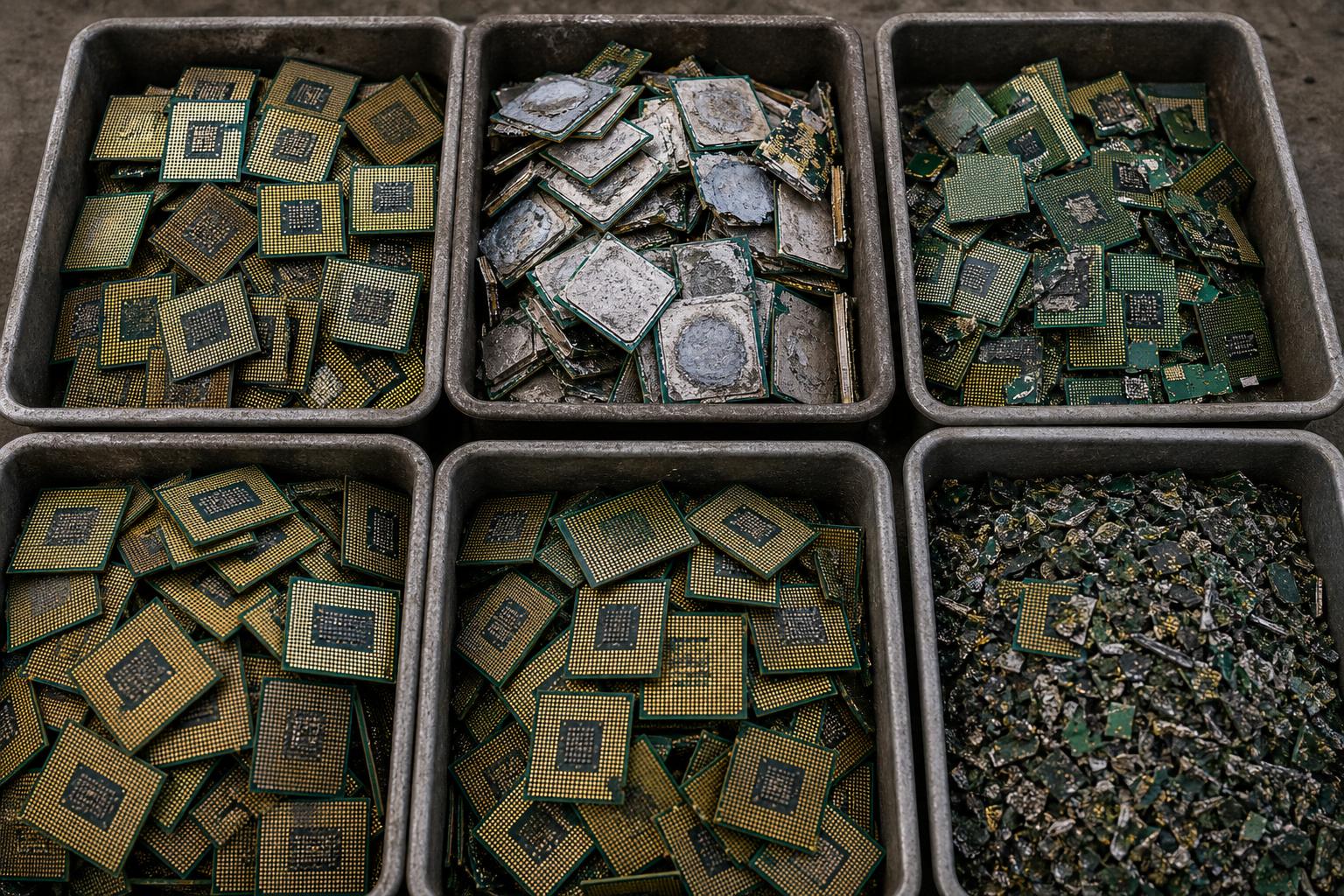
CPU scrap grades are the shared vocabulary that lets refiners, recyclers and traders describe processor scrap in the same way before a pallet or container is ever loaded. A grade is not a statement of value. It is a description of what the material physically is, how it has been sorted and how it is likely to behave in your process. This reference explains the four grades Scrap Cove supplies in bulk (ceramic, gold-plated pins, fiber and mixed), with identification notes, typical uses in refining and the questions worth asking before you buy. It is written for registered businesses. National rules on electronic waste, import and export differ widely, and checking them remains the buyer's own responsibility.
In this article
- Key takeaways
- What CPU scrap grades are and why buyers rely on them
- Ceramic CPU scrap: identification notes and refining uses
- Gold-plated CPU pins: identification and refining use
- Fiber CPU scrap: identification and handling
- Mixed CPU scrap: when a blended grade makes sense
- CPU scrap grades compared side by side
- How to compare CPU scrap lots and suppliers
- Compliance and export: what to check before requesting a quote
- Conclusion
Key takeaways
- There are four working grades of bulk CPU scrap: ceramic, gold-plated pins, fiber and mixed. Each describes a physical form and a sorting level.
- Metal content varies by lot within every grade, so no grade name should be read as a content figure. Request a lot report before you commit.
- Ceramic and fiber processors are usually told apart by the package material: a hard ceramic body versus an organic, fibreglass-type substrate.
- Mixed lots suit buyers whose process can handle several forms together; single-grade lots suit buyers who want predictable handling.
- Technical data sheets, packaging details and the buyer and destination review are the practical tools for comparing suppliers.
- Export of electronic scrap depends on the destination and on your own licences. Check your national rules first.
What CPU scrap grades are and why buyers rely on them
Processors reach the scrap stream from servers, desktops, workstations and telecom equipment, in many generations and package styles. Without a grading convention, two suppliers could use the same words for very different material. Grading is the practical answer: it groups processors by physical form so that handling, comparison and quoting can be consistent.
A grade describes form, not worth
The grade tells you what kind of item is in the box: for example, a ceramic-bodied processor or a loose, sorted pin. It does not tell you how much of any metal the material contains, and it should never be used as a shortcut for valuing a lot. Content varies by lot, depending on the processor generations present, how the material was collected and how it was sorted. Responsible buyers treat the grade as a starting description and the lot report as the evidence.
Why one label can mean different things
There is no single international standard for CPU scrap terminology. One trader's "fiber" may be another's "plastic" or "green" processor, and "mixed" can cover anything from a deliberate blend to unsorted leftovers. This is why written specifications matter more than names. When you compare offers, ask how each grade is defined, what is excluded and how contamination is treated.
CPU scrap types you will meet in the market
Searches for CPU scrap types usually lead to the same four groups described below. Some sellers add sub-categories by processor family or era. Those can be useful, but they are best treated as additional notes on top of the four base grades rather than replacements for them.
Ceramic CPU scrap: identification notes and refining uses
Ceramic CPU scrap consists of processors built on a rigid ceramic package. It is the grade most buyers think of first when they search for bulk processor scrap, and it is the one with the longest history in refining supply chains.
How to recognise ceramic processors
- Body: a hard, usually off-white, beige or grey ceramic square or rectangle, which feels dense and brittle compared with plastic.
- Contacts: often a grid of metal pins on the underside, or contact pads, depending on the socket type.
- Lid: many have a metal lid or cap on top, sometimes with a visible seam; some have exposed die areas.
- Markings: printed or laser-marked model text and a corner-orientation mark are common.
If the substrate flexes slightly, looks green or brown, or shows layered fibreglass edges, it is not ceramic and belongs in a different grade.
Typical uses in refining
Refiners generally feed ceramic processors into a pre-processing route, such as dismantling, size reduction and separation, before recovery chemistry or smelting stages. The exact route depends on each refinery's equipment, environmental controls and permits. Some operations remove pins and lids first; others process the whole item. These are process decisions for the buyer, and nothing here should be read as a recovery expectation.
What to confirm before ordering
Ask about the processor generations present, the proportion of items with lids attached, any non-ceramic contamination and the packaging used. For a step-by-step view of how an order progresses, see our guide on how to buy ceramic CPU scrap in bulk, from buyer review to shipment approval.
Gold-plated CPU pins: identification and refining use
Gold-plated CPU pins are the contact pins removed from processors and supplied as a separate, sorted material. Because the pins are already separated from the package, this grade differs in character from the whole-processor grades: it is a small, dense, loose material that is handled by weight and packed accordingly.
How to recognise sorted pins
- Appearance: short, thin metal pins, often with a visible gold-coloured finish, sometimes with a flared head or a straight shank.
- Condition: ideally free from ceramic fragments, plastic, solder and loose dust, though levels of residue vary by lot.
- Consistency: pins from different processor families can differ in length and shape, so a lot may contain several pin styles.
A gold-coloured look alone is not proof of anything. Plating thickness and base metals vary, which is why a lot report matters more than visual impressions.
Typical uses in refining
Refiners commonly use sorted pins as a concentrated feed for their precious-metal recovery process, since the material is already separated from bulky packaging. Handling still needs care: fine pins can be sharp, and dust control and appropriate protective equipment apply as with any metal-bearing electronic scrap.
Points to check in a pin lot
Ask how the pins were removed and sorted, what level of foreign material is typical, how the lot is packed to avoid loss during transit and whether you can see a lot report. More detail on sorting and packing is set out in our article on gold-plated CPU pins for sale, and how pins are sorted, packed and quoted per kg.
Fiber CPU scrap: identification and handling
Fiber CPU scrap covers processors built on an organic, fibreglass-reinforced substrate rather than a ceramic body. These tend to be lighter and thinner than ceramic items, and they usually come from different processor generations. The name comes from the glass-fibre material in the substrate, similar to what is found in printed circuit boards.
How to recognise fiber processors
- Substrate: a flat, thin board, typically green, brown or another solid colour, with a layered look at the edges.
- Contacts: either pins, or flat gold-coloured contact pads in a grid on the underside.
- Top surface: often a metal heat spreader, with small surface-mounted components visible around the edges on some designs.
- Weight and feel: lighter than ceramic items and slightly flexible when thin.
The full grade definition and specification outline is available in our page on fiber CPU scrap grade definition, appearance and specification.
Typical uses in refining
Fiber processors are generally handled as circuit-board-type material, so they tend to fit refining and recycling routes that already process printed circuit assemblies. Because the substrate is organic, the thermal and emissions behaviour differs from ceramic, and operators should assess this against their own permits and controls. Whether fiber suits you depends on your plant, not on the grade name. For a direct contrast, read our ceramic vs fiber CPU scrap grade comparison for refiners.
Mixed CPU scrap: when a blended grade makes sense
Mixed CPU scrap is a blend of processor forms, supplied as one grade. It exists because not every buyer needs, or wants to pay the sorting effort for, a fully separated stream.
What mixed means in practice
A mixed lot may contain ceramic and fiber processors together, with different generations and package styles. The ratio between forms changes from lot to lot, so it should be requested in writing rather than assumed. A reputable mixed grade is still defined: it should state what is allowed in the blend and what is excluded, such as loose batteries, capacitors or unrelated boards.
Where mixed lots fit a refining plan
Mixed material suits operations that can take several forms into a single pre-processing line, or that sort internally as a routine step. It is less suitable where a process has been tuned to one form, because variation in the feed can complicate planning. Buyers who need predictable handling usually choose a single-grade lot; buyers who value flexibility may prefer mixed.
- Ask for the stated blend range and how it is verified.
- Ask what is excluded from the grade.
- Plan your receiving inspection around the possibility of variation between pallets.
CPU scrap grades compared side by side
The table below summarises how the four grades differ in physical form and in what a buyer should confirm. It deliberately contains no content or value figures, because these vary by lot.
Summary table
| Grade | Typical form | Quick identification | Typical refining handling | Confirm before buying |
|---|---|---|---|---|
| Ceramic CPU scrap | Whole processors on a ceramic package | Hard, dense, beige or grey body; often metal lid and pins | Pre-processing such as dismantling or size reduction, then recovery stages | Generations present, lid presence, contamination, packaging |
| Gold-plated CPU pins | Loose, sorted pins | Short, thin pins with a gold-coloured finish | Direct feed to recovery process after your own checks | Removal method, foreign material, pin styles, packing |
| Fiber CPU scrap | Whole processors on an organic substrate | Thin, lighter board, often green or brown, with pads or pins | Routes that handle circuit-board-type material | Substrate types, heat spreaders, attached components |
| Mixed CPU scrap | Blend of processor forms | Both hard ceramic and board-type items in one lot | Mixed feed line or internal sorting first | Blend range, exclusions, variation between pallets |
Choosing a grade for your process
Start from your plant, not the market. Consider which forms your equipment can accept, what your environmental permits allow and how much sorting you want to do yourself. A refiner with a dedicated pin-processing route may favour pins, while one with general electronics capacity may be comfortable with fiber or mixed. If you are undecided, request quotes for more than one grade and compare the written specifications side by side.
How to compare CPU scrap lots and suppliers
Because bulk CPU scrap quotes are prepared individually, comparison depends on documents and clear questions rather than a published price list. The following practices help any buyer, whichever supplier is used.
Ask for a lot report
Metal and material content varies by lot, so a lot report is the right starting point for your own assessment. Ask what it covers, how it was prepared and whether you are expected to verify the material independently on receipt. Treat any claim that a grade always contains a particular amount of metal with caution.
Use technical data sheets
Technical data sheets in PDF format, available per grade, give a consistent description of appearance, form and specification outline. Read them alongside your own process requirements, and note any term that differs from how you use the same word internally. If something is ambiguous, ask for clarification in writing before quote acceptance.
Packaging and inspection on receipt
Check how material is packed, how pallets or containers are labelled and what your receiving procedure will be. Agree internally how discrepancies will be documented. For pins in particular, secure packing matters because small loose material can be lost through damaged packaging. Beyond that, no supplier should be asked to promise outcomes that depend on your own processing.
Questions to put to every supplier:
- How is each grade defined, and what is excluded?
- Is a lot report available, and what does it include?
- Are technical data sheets available for the grades you need?
- What buyer and destination review is required before a quote is issued?
- How is material packed for export?
For background on the factors that shape individual quotes, see what shapes each bulk quote for ceramic CPU scrap.
Compliance and export: what to check before requesting a quote
Electronic scrap is regulated differently around the world, and the rules that apply to you depend on where you operate and where material is moving. This article does not provide legal, tax or customs advice.
Electronic waste rules differ by country
Some countries classify processor scrap as waste, others as a secondary raw material in certain circumstances, and many require permits for handling, storage, import or processing. International frameworks, including the Basel Convention on the control of transboundary movements of hazardous wastes, influence national rules, but each country applies them in its own way. Check your national and regional requirements, and confirm that your site is authorised for the material you intend to process.
Export depends on destination and your licences
Whether any shipment can go ahead depends on the destination and on the buyer's own licences and authorisations. Scrap Cove supplies registered businesses worldwide from the UK and the USA, and each quote follows an individual buyer and destination review. We do not ship to restricted destinations. Nothing in a grade description should be read as confirmation that an export or import is permitted in your jurisdiction.
When you are ready, prepare the following before you contact a supplier:
- Your company registration details and the intended end-use site.
- The grade or grades you are considering and the approximate quantity.
- The destination country and port or delivery location.
- Any licences or permits you hold for importing and processing electronic scrap.
Conclusion
CPU scrap grades describe the physical form and sorting level of processor scrap: ceramic bodies, sorted gold-plated pins, fiber-substrate processors and blended mixed lots. Each is identified by appearance and handled differently in refining, and content varies by lot within every grade. Compare lots through written definitions, lot reports and technical data sheets, and check your own national rules on electronic waste and export before any purchase. To discuss the grades you need, go to the request-a-quote page and send your requirements for an individual review.
Frequently asked questions
What are the main CPU scrap grades?
The four grades Scrap Cove supplies in bulk are ceramic, gold-plated pins, fiber and mixed. They describe the physical form of the material and how it has been sorted, not its content or value.
How can I tell ceramic CPU scrap from fiber CPU scrap?
Ceramic processors have a hard, dense, usually beige or grey body, often with a metal lid. Fiber processors sit on a thin, lighter, organic fibreglass-type substrate, commonly green or brown, with pins or flat contact pads.
Does a grade tell me how much gold or other metal a lot contains?
No. Metal content varies by lot within every grade, depending on processor generations and sorting. Buyers should request a lot report and make their own assessment.
What is mixed CPU scrap?
Mixed CPU scrap is a blend of processor forms, such as ceramic and fiber items, supplied as one grade. The ratio between forms changes by lot, so ask for the blend range and exclusions in writing.
Are technical data sheets available for each grade?
Scrap Cove provides technical data sheets in PDF format per grade. They describe appearance, form and a specification outline, and are intended to be read alongside your own process requirements.
Is it legal to import or export CPU scrap?
This depends on the countries involved, the classification of the material under national rules and the buyer's own licences. Check your national electronic waste and export requirements before ordering. Scrap Cove does not ship to restricted destinations.
How do I buy CPU scrap in bulk from Scrap Cove?
Scrap Cove sells to registered businesses by request for quote. Each quote is prepared individually after a buyer and destination review, and there are no list prices.